
technology
Built for developers, by developers.
Hoops is a sophisticated DeFi aggregation layer built on Soroban. It provides the core infrastructure to build advanced DeFi products by streaming unified liquidity and enabling best-price execution across multiple Automated Market Makers (AMMs).




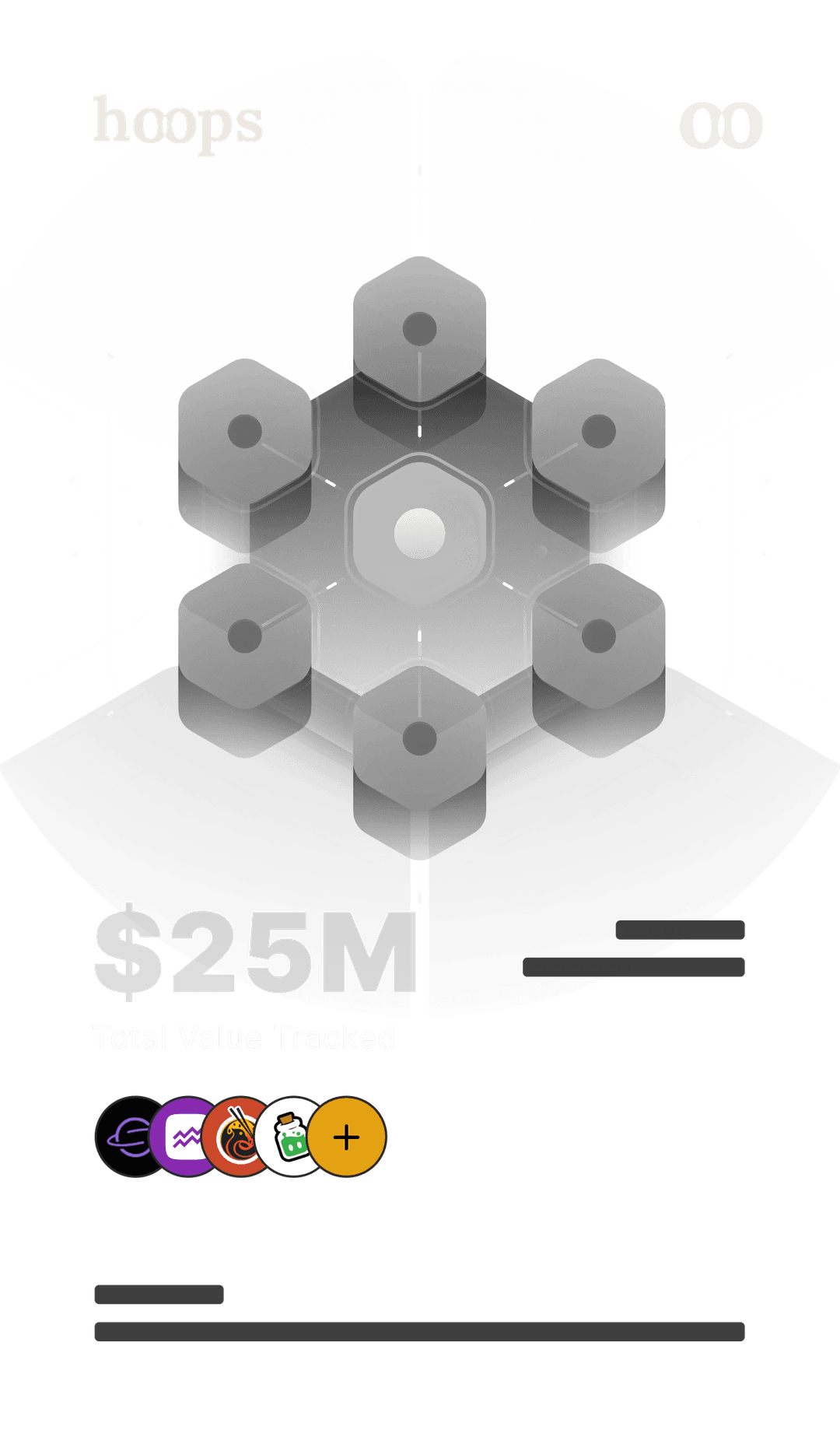
A Unified Gateway to DeFi Liquidity.
Hoops exists to accelerate Web3 development by giving builders a modular, extensible data and execution layer. Interact with a growing ecosystem of AMMs through a single, elegant interface—no vendor lock-in, no operational overhead.
"Hoops abstracts away the complexity of cross-AMM interaction. The unified interface and smart account system are game-changers for capital efficiency and user experience."

Markus Freeman
Dev Ops, Azious
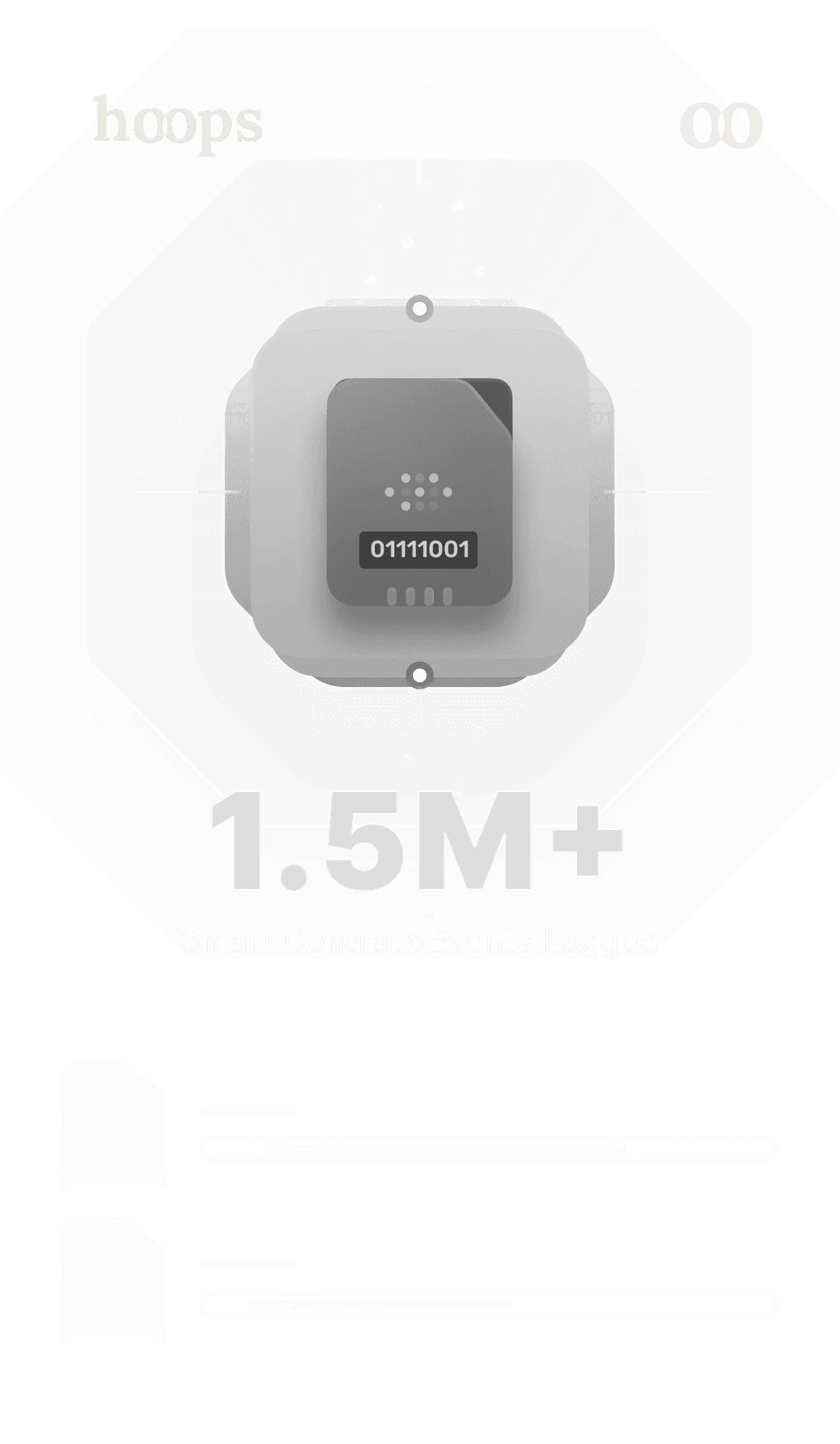
Resilient, Automated Security
Empower your protocol without burning resources. Our architecture is fortified with battle-tested security patterns, from fine-grained access controls to time-sensitive operation protection.
- Shared Security Model: Inherently more secure by diversifying operations across multiple, established AMMs.
- On-Chain Verification: Every swap and liquidity action is guarded by on-chain proofs and authorization checks.
- Architectural Soundness: Benefit from open-source contracts, comprehensive error handling, and robust input validation.







Your gateway to everything Hoops.
Stay current with daily updates, engineering deep-dives, and community news.
view all posts



Your questions, answered
Who is Hoops for?
Hoops is built for developers, analysts, and teams working on Stellar who need reliable, real-time DeFi data. Whether you're building an app, running research, or powering dashboards, Hoops gives you clean, structured access to on-chain activity.
What does Hoops actually do?
Hoops indexes Stellar DeFi protocols in real time and turns raw on-chain events into usable data—TVL, volume, fees, pool composition, swaps, and historical trends. No scraping, no guesswork, no manual parsing.
How does the architecture work?
Hoops runs on a modular, layered architecture. Indexers ingest and normalize on-chain data. A routing and aggregation layer organizes it across protocols. This data is then exposed through dashboards and APIs designed for fast querying and easy integration.
What data can I access today?
You can query live and historical data for liquidity pools, tokens, swaps, volumes, fees, and protocol-level metrics across supported Stellar AMMs. Everything is structured, consistent, and ready to use.
How do developers integrate Hoops?
Developers can consume Hoops data through APIs or use it directly in analytics dashboards, bots, research tools, or DeFi frontends. Hoops is designed to plug into existing workflows without forcing new abstractions.
Where can I find documentation and examples?
All documentation includes clear explanations of the data model, endpoints, and example usage. You'll find practical samples showing how to query pools, track metrics, and build on top of Hoops data.
Is Hoops custodial?
No. Hoops is a data and infrastructure layer. It does not custody user funds and does not act as an intermediary.
Why Hoops instead of building this myself?
Indexing DeFi data correctly is hard, expensive, and time-consuming. Hoops handles normalization, edge cases, and protocol differences so you can focus on building products, not infrastructure.
"Hoops lets us provide best-price execution for cross-border remittances in minutes, not months."
Lead Engineer, GloboPay
"The API is lightning-fast and the Soroban contracts are rock-solid. Our traders love the reduced slippage from the aggregation engine."

CTO, WaveDesk
"With Hoops, our users earn yield efficiently across multiple AMMs from a single deposit. It's a no-brainer."

Product Manager, BrightWallet
Download our architecture overview
Join the community, contribute code, or start building today.